


Based on Avetik Isahakyan’s 1940 fable “The Wise Men of Nukim City.”
Going down the wrong road does not mean the road was worthless,
if you learn from it.
Introduction
An organization that moves without a clear purpose, mindful use of resources, and responsible leadership inevitably heads in the wrong direction — at high cost. Avetik Isahakyan’s fable “The Wise Men of Nukim City” — humorous, satirical, and profound — is an excellent case study for discussing several fundamental mistakes in management and leadership.
The story tells of the people of an imaginary city, Nukim, who consider themselves “wise” yet are in fact uninformed and gullible. Nukim is a very cold place — “two winters, one summer.”
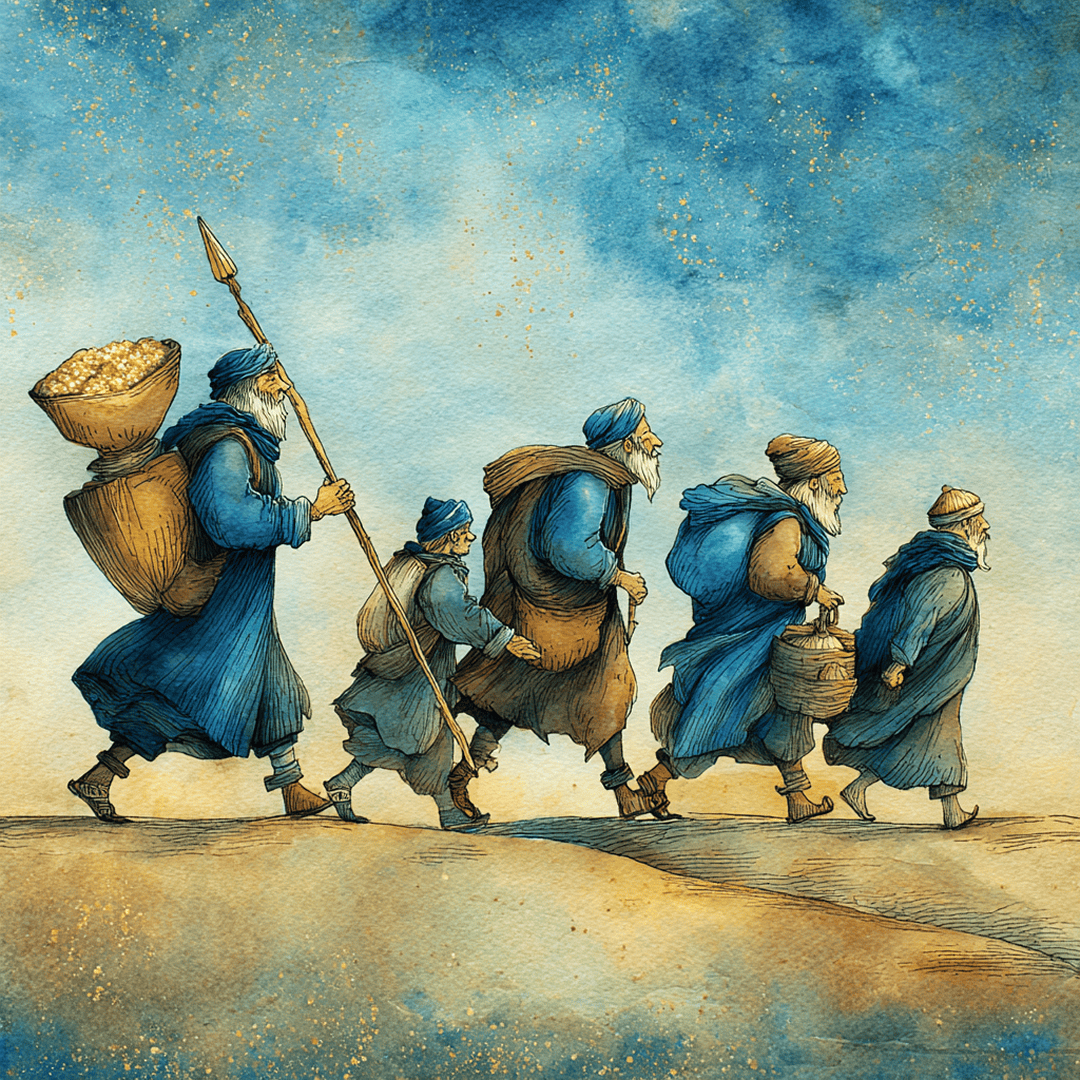
The residents decide the only solution is to go to the King and demand that the situation changes to two summers and one winter; they even issue an ultimatum that if he refuses, they will not remain in the city. They collect a purse full of gold as a gift, hang it from a spear, and set out. On their way they meet merchants selling unfamiliar goods — hot pepper, grapes, sugar — which they taste for the first time. When night falls, they plant the spear in the ground, lie down around it, and sleep. A traveller passes by, lowers the spear, sees the gold, takes it, fills the purse with gravel and sand, and plants the spear back again. In the morning the “wise ones” continue on and, after asking their way, reach the royal city. They announce they have brought a gift and demand that the King resolves their issue. The King, finding gravel and sand as a “gift”, decides to test them and, seeing their foolishness, simply sends them home.
The Fable’s Characters in a Corporate Context
Analysed corporately, each character’s behaviour and thinking shape the message: misguided goals, superficial “cleverness,” and the absence of real leadership.

The Nukim townspeople are naive and narrow in outlook. They act quickly without thinking, set conditions without asking whether those conditions are even feasible.
Corporate parallel: devoted employees with limited understanding of the bigger world, who do not try to solve problems themselves and rely entirely on leaders.
The “wise ones” see themselves as brilliant and confident, yet they do not understand the world around them and are cut off from reality.
Corporate parallel: mid-level managers — or even the CEO — displaying the same behaviour.
The traveller symbolizes the unforgiving law of life and competition: inattention and lack of vigilance are punished; competitors seize whatever is neglected or poorly managed.
Corporate parallel: rival companies that immediately exploit lapses in managing resources, quickly appropriating value that was left unguarded.
The King appears briefly, yet represents the authority to whom the Nukim delegates appeal.
Corporate parallel: an owner or top executive embodying an improper leadership style — one who does not listen, mocks, fails to take issues seriously, and leaves problems unresolved.
From the outset we see several management errors
Lack of information. Neither the townspeople nor the “wise ones” study the situation or other cities’ examples; they do not explore how to live with the conditions they have. Isolated from the world, they do not grasp reality.
Waste of time and resources. They taste pepper, grapes, sugar one after another, repeating the same mistake; they never think to bring grapes or sugar back to Nukim or learn how to use them.
Failure to learn. After one person burns his mouth with pepper, he does not warn the others; everyone repeats the same error, wasting time on a failed experiment.
Ignoring risk. They focus on form rather than substance: they worry about the spear’s length, not about safeguarding the gold — so a random traveller takes it with ease.
These errors expose vulnerabilities in management and collaboration and highlight principles whose neglect leads to such outcomes.

How to Avoid Such Errors and Build a More Effective, Sustainable Practice
Several Brief fundamental directions:
1. The Importance of Situational Analysis
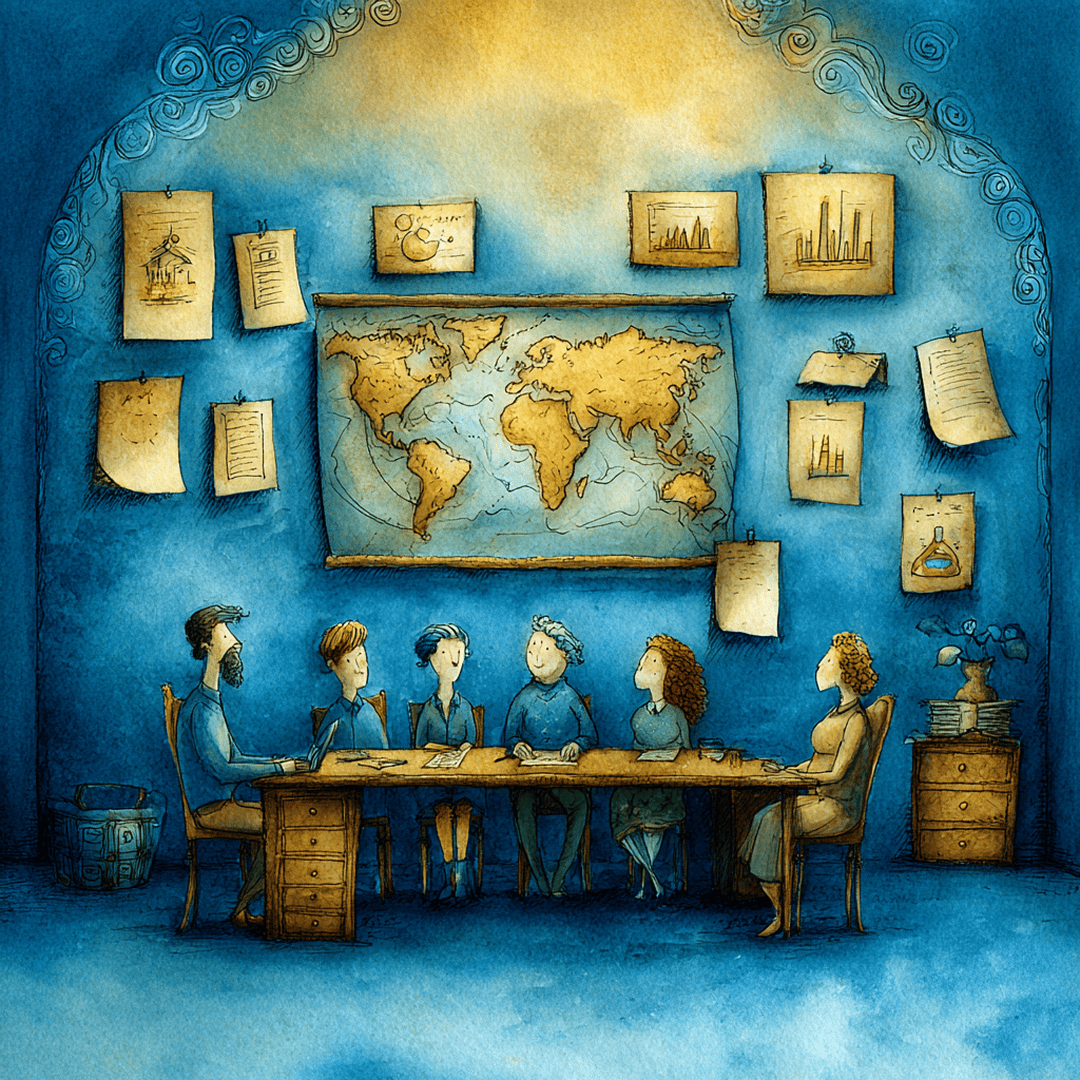
A core layer of the fable is the absence of analysis. The Nukim townspeople simply decide their climate is “unacceptable” and, without study, comparison, experimentation, or even assessing feasibility, go to the King. Corporate translation: a textbook case of an uninformed strategic decision.
2. The Importance of Oversight
The fable can also be read through the lens of inattention and lack of control. The moment when the Nukim townspeople fall asleep and leave their gold unprotected, and a traveller comes and replaces it with gravel, can be interpreted in the corporate world as the loss of brand, customers, or employees due to neglect.
3. The Importance of Negotiation
“The Wise Men of Nukim City” is not only a story about naivety; it is also a classic example of entering negotiations unprepared. Viewed corporately, it shows clearly what happens when a team or leadership enters talks without prior analysis, fact-checking, and a clear strategy.
4. The Importance of True Leadership
Consider the king’s figure from the standpoint of leadership responsibility. In the fable, the king can be read as the superior who sees his team acting wrongly, yet does not intervene or guide — he simply “sends them on their way,” without offering a substantive solution.
5. The Importance of Goal-Setting and Wise Decision-Making
In the fable, the “wise ones” are not only wrong — they also do not question one another. They all agree their goal is correct, their gift valuable, their journey justified. In other words, there is a group consensus that is never examined. In the corporate world this is known as the trap of groupthink: it is dangerous when a team or leadership does not tolerate dissent, when everyone agrees because they fear contradiction, and when criticism is viewed as obstruction rather than as constructive.
Wise Leadership: The Power of Analysis, Attention, and Responsibility
Three key messages of the fable form simple yet deep lessons for business thinking, relevant in any era.
Sound judgment surpasses formal “cleverness.” Being a leader does not automatically mean being wise. True judgment requires the capacity to understand the world, an open mind, and a willingness to learn from mistakes. In organizations, this means promoting critical thinking at every level and allowing questions to be asked regardless of rank.
Any change must be based on analysis. The Nukim townspeople chose to “change the weather” without understanding whether it was possible or whether it would solve the problem. In corporate reality, this reminds us that strategic decisions must rely on data, experience, and market analysis. Change cannot be driven by “we don’t like it,” but by “we have understood, analysed, and this is the best path.”
Inattention can cost the most. Leaving the gold unguarded becomes a cause of loss in the fable. In organizations, similar neglect appears as customer loss, employee turnover, or damage to data or brand. Values must be protected through risk management, quality control, and a culture of engagement.

Taken together, these principles constitute the essence of wise leadership: think ahead, act on data, and protect what you have built. Leadership grounded in analysis and attention can prevent losses and foster growth.
Conclusion
However ironic and satirical the fable may be, at its core it carries a subtle layer of hope — one that appears not in the actions of its characters, but in the thoughts of us, the readers. The people of Nukim erred: they set the wrong goal, failed to analyse, wasted resources, did not protect their values, did not negotiate, and in the end returned having changed nothing. Yet this very story gives us the opportunity not to repeat those mistakes — to think, to question, to doubt superficial “cleverness,” and to search for meaning. Taking the wrong road does not mean the journey was in vain, if you learn from it.
Wisdom begins with a question, not an answer. The Nukim townspeople had no questions — they had convictions. True wisdom begins at the moment you dare to ask, “What if we are wrong?”
A road that changed nothing in the city can still change our way of thinking. In the fable, nothing changed in Nukim or in the lives of its people — but if we, the readers, change, that is already a victory.
The fable does not change Nukim, but it changes us. And that alone is enough to make the world a little wiser.
True “wise men” learn from the mistakes of others.
Download the complete guide and equip yourself with a clear management toolkit to keep your business far from the fate of Nukim.
